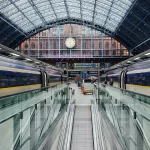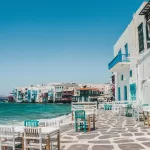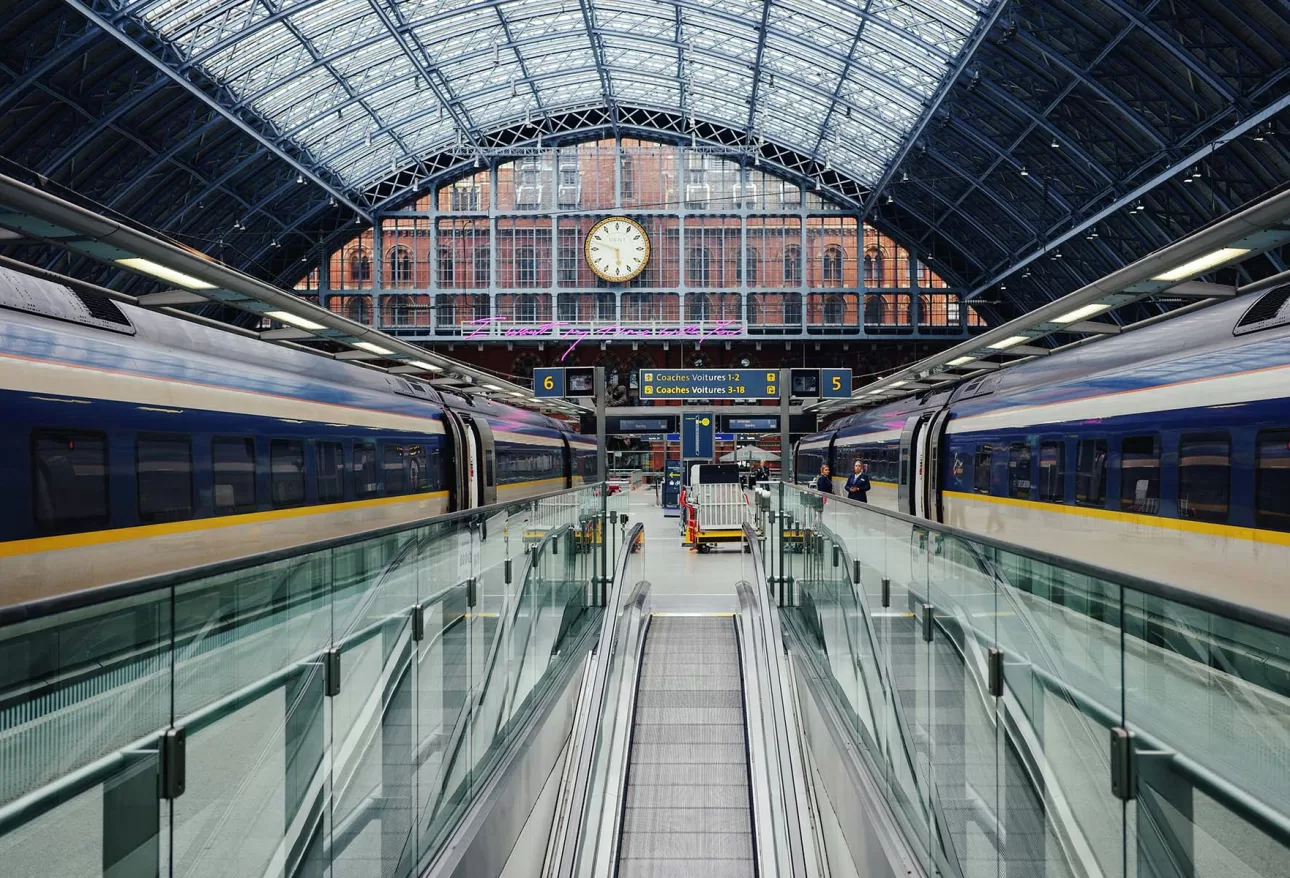
Most of us see Europe the same way: fly in, see the city, fly home. The train changes the logic. The journey stops being dead time between two places and becomes part of the trip, with lower emissions and no security queues. For anyone starting from Greece there’s just one obstacle: there’s no easy rail link out of the country into central Europe. Here’s how to get around it.
Why the train, not the plane
According to Interrail, flying emits on average six times more greenhouse gases than a high-speed train (its comparisons use the EcoPassenger calculator). The same site notes that transport accounts for around 31% of the CO2 emitted in the EU.
Beyond the numbers, slow travel has practical upsides. Trains arrive in the city centre, not at an airport outside town. Nobody weighs your bag. And you actually see the country you’re crossing, from the Alps to the vineyards, instead of clouds.
How Interrail works
Interrail is a pass that lets you board participating railways’ trains without buying a ticket for every leg. There are two main types:
- Global Pass. Covers 33 countries. You choose how many travel days you want within a validity period.
- One Country Pass. For a single country (or a group such as Benelux or the Nordic countries), with set travel days within one month. You activate it within 11 months of purchase.
One detail many people miss: if you live in a covered country, such as Greece, the Global Pass gives you just one journey out of your home country and one back in. It’s not a way to tour Greece.
Discounts for young travellers, families and over-60s
- Youth, 12–27: 25% off the adult price, based on your age on the day the trip starts.
- Over 60: 10% off.
- Children 4–11: travel free, up to two per adult pass holder, in the same class as the adult. Under-4s need no pass.
- Class: a 1st class pass is valid in 2nd class too, not the other way round.
The hidden cost: seat reservations
A pass doesn’t make everything free. Most high-speed trains and night trains require a reservation at extra cost, and in France, Italy and Spain that’s the norm. Interrail gives indicative averages: around €10 for a domestic train, €15 for an international one and €20 for a night train. On a trip with lots of fast legs it adds up, so budget for it from the start. Local and regional trains generally don’t need one.
The Greek problem: getting out
This is the part foreign guides skip. You have two realistic options.
- Ferry from Patras or Igoumenitsa to Italy. The greenest start, and from Kalamata, Patras is close. According to Interrail, pass holders get discounts on Superfast Ferries and Minoan Lines between Greece and Italy, and Grimaldi Lines offers discounts too. You book the discounted fare directly with the ferry company, ideally well ahead in summer. Note that the departure day of a night ferry can’t be the last valid day of your pass.
- Fly to a rail hub. From Athens or Thessaloniki, fly to a city like Milan or Vienna and pick up the train there. Less ideal for the climate, but it saves days when time is short.
There’s also the 6-day Greek Islands Pass: two international days for ferries to and from Italian ports, plus four days around the Greek islands within one month, on Attica Group ships. Superfast sails from Venice, Ancona and Bari to Patras, Igoumenitsa and Corfu (Corfu in summer only). Ferry seat reservations are mandatory and free.
What about Greek trains?
Greece’s main rail operator is Hellenic Train, whose core route is Athens–Thessaloniki, alongside suburban and regional lines. The company has announced 23 new Coradia Stream electric trains. For a trip abroad, though, the train in Greece is usually where the journey begins rather than your route into Europe.
Want us to plan the route with you?
At Penguin Travels & Tours we can organise your ferry or flight out, help you pick the pass that fits your plan and work out seat reservations in advance, so there are no surprises on the way.
Dreaming of Europe from a train window? Stop by our office in Kalamata (Vasilissis Olgas 4) or call us at +30 27210 80701.